
Freehold vs Leasehold in Thailand
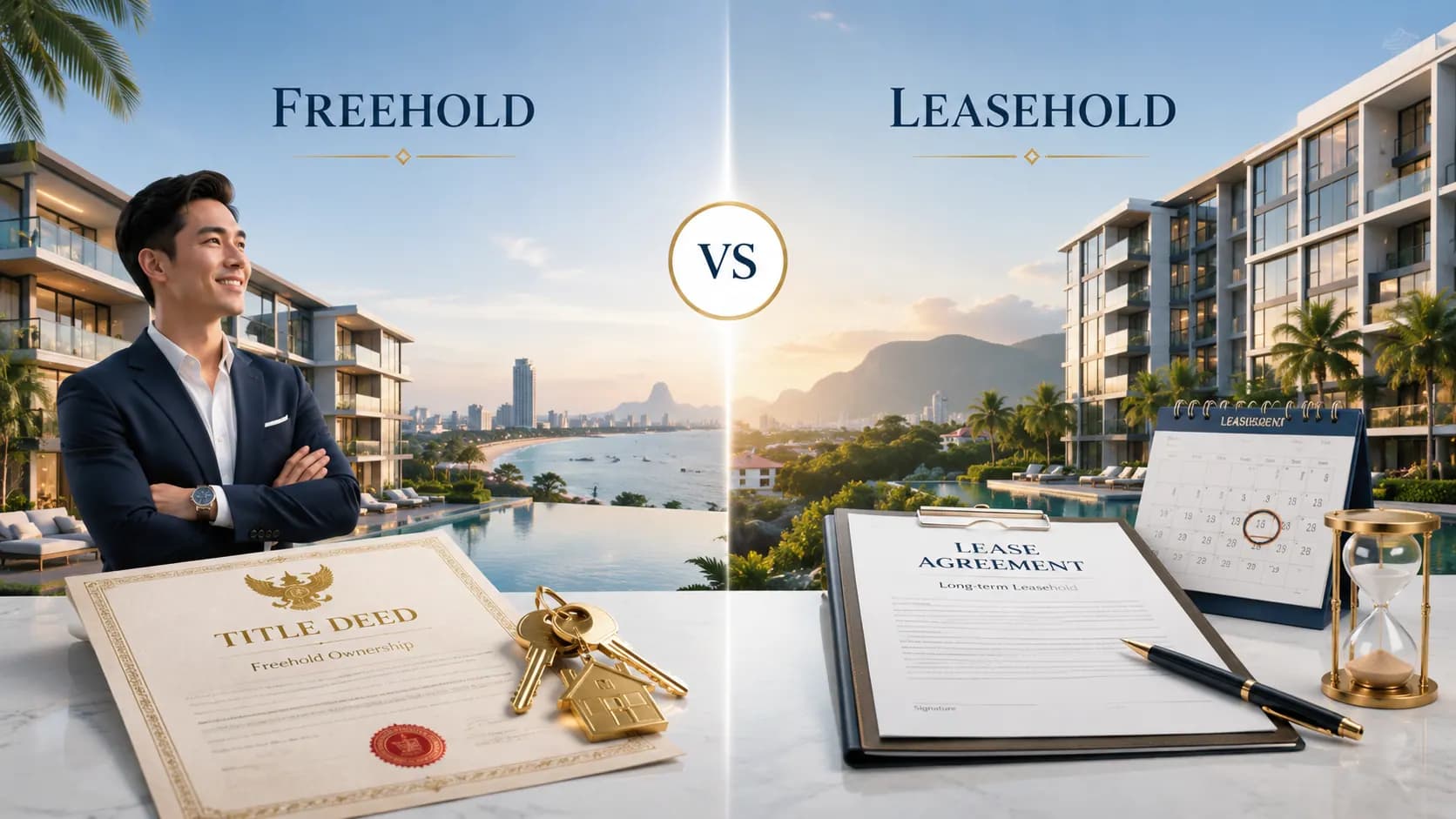
Freehold vs Leasehold in Thailand: What Foreign Buyers Need to Know
Buying property in Thailand is an exciting step, especially for foreign buyers looking for a second home, investment property, or long-term residence. But before choosing a condo, villa, or land-based property, one question comes up very quickly:
Should you buy freehold or leasehold?
The answer depends on the type of property, your nationality, your long-term plans, and the legal structure available for that asset. In Thailand, the difference between freehold and leasehold is especially important because foreign ownership of property is regulated differently from many Western countries.
This guide explains the key differences in simple terms.
What Does Freehold Mean in Thailand?
Freehold ownership means you own the property outright.
For foreign buyers in Thailand, freehold ownership is most commonly available for condominium units, provided the building still has space within its foreign ownership quota.
Under Thai condominium rules, foreign buyers can own condominium units in their own name, but foreign ownership in a condominium project is generally limited to 49% of the total saleable area of the building. Once that quota is full, additional foreign buyers usually cannot purchase units in that building as foreign freehold. (thailandlawonline.com)
In practical terms, freehold is usually the clearest and strongest form of ownership available to a foreign buyer in Thailand.
With a foreign freehold condominium, your name is registered on the title deed at the Land Department. You can live in the property, rent it out, sell it, or pass it on according to the applicable legal procedures.
What Does Leasehold Mean in Thailand?
Leasehold means you do not own the property permanently. Instead, you lease the right to use it for a fixed period.
In Thailand, long-term leases are commonly used for villas, houses, land, and some condominium units where foreign freehold ownership is not available.
A standard long-term lease in Thailand is often structured as a 30-year registered lease. Leases longer than three years should be registered with the Land Department to be legally enforceable against third parties. ([Conrad Properties](https://www.conradproperties.asia/buyers-guide/property-real-estate-faq?utm_source=chatgpt.com "Koh Samui Property & Real Estate FAQ"))
Some leasehold contracts include renewal options, such as “30 + 30 + 30 years.” However, buyers should understand that renewal promises are contractual arrangements and should be reviewed carefully by a qualified lawyer. The first registered lease period is usually the key legal foundation.
Leasehold can be a practical solution, especially for villas or properties built on land, because foreigners are generally not allowed to own land directly in Thailand except in very limited cases. (thailandlawonline.com)
Why Foreigners Usually Buy Condos as Freehold
For many foreign buyers, a condominium is the simplest and most secure way to own property in Thailand.
That is because a foreigner can legally own a condominium unit in their own name if:
The condominium is registered under Thai condominium law.
The foreign quota is still available.
The purchase funds are transferred into Thailand correctly in foreign currency.
The ownership transfer is properly registered at the Land Department.
This is why foreign freehold condos are often preferred by buyers who want maximum clarity, easier resale, and a direct ownership structure.
For example, if you buy a Bangkok condominium in foreign freehold, your ownership is recorded officially, and you hold the unit in your own name. This is very different from leasing a unit or using a more complex structure.
Why Villas and Houses Are Usually Leasehold
Villas, houses, and land-based properties are more complicated.
A foreigner may own a building in some situations, but foreigners generally cannot own the land underneath the property directly. This is why villas in places such as Phuket, Koh Samui, Hua Hin, or Pattaya are often sold through leasehold structures.
In this case, the foreign buyer may lease the land for a long-term period and own or use the villa according to the agreement. This can work well when the contract is properly drafted, registered, and supported by clear documentation.
However, leasehold is not the same as freehold ownership. You are acquiring a long-term right to use the property, not permanent ownership of the land.
That does not necessarily make leasehold bad. It simply means the buyer must understand the structure and the legal details before committing.
Freehold vs Leasehold: Main Differences
The main difference is simple:
Freehold gives you ownership. Leasehold gives you usage rights for a fixed period.
Freehold is usually stronger for long-term security and resale value. It is commonly used for condominium units within the foreign quota.
Leasehold is more common for villas, houses, land, or condo units where foreign freehold ownership is not available.
Freehold is often easier to understand because the buyer owns the unit directly. Leasehold requires more attention to the contract, registration, renewal clauses, transfer rights, inheritance rights, maintenance responsibilities, and what happens at the end of the lease.
Is Leasehold Safe in Thailand?
Leasehold can be safe when it is structured properly.
A good leasehold agreement should clearly explain:
The exact lease term.
Whether the lease is registered at the Land Department.
Who owns the land.
Who owns the building.
Whether the lease can be transferred or sold.
Whether the lease can be inherited.
Who pays maintenance fees, taxes, and repairs.
What happens if the landowner sells the land.
What happens at the end of the lease.
Whether renewal options are realistic and enforceable.
The most important point is this: the quality of the contract matters.
A well-drafted registered lease with a reputable developer or landowner can be a reasonable option. A vague or poorly written lease can create problems later.
Before signing any leasehold agreement, foreign buyers should always use an independent lawyer who is not representing the seller or developer.
Which Option Is Better for Investment?
For pure investment, many buyers prefer foreign freehold condominium units because they are easier to explain to future buyers.
A freehold condo can often be more liquid because another foreign buyer can understand the structure quickly, check the foreign quota, and complete the transfer through the Land Department.
Leasehold properties can still be attractive, especially if the location, rental yield, design, and price are strong. Villas in resort areas may generate good rental income, even when structured as leasehold.
However, leasehold resale can sometimes be more sensitive to the remaining lease term. A property with 28 or 29 years remaining on the lease may be easier to resell than one with only 10 or 12 years remaining.
For that reason, investors should not only look at the property price. They should also look at the remaining lease period, contract terms, developer reputation, and exit strategy.
Which Option Is Better for Lifestyle Buyers?
For lifestyle buyers, the answer depends on how they plan to use the property.
If you want a simple city apartment in Bangkok, Pattaya, Phuket, or Hua Hin, a foreign freehold condominium is often the most straightforward choice.
If you want a private villa with a garden, pool, and more space, leasehold may be the more common structure, especially in coastal or resort destinations.
A buyer planning to enjoy a villa for 10 to 20 years may find a well-structured leasehold property perfectly suitable. A buyer focused on long-term generational ownership may prefer a foreign freehold condominium or may need to explore more advanced legal structures with professional advice.
What About Thai Company Ownership?
Some foreign buyers hear about using a Thai company to hold land.
This structure requires extreme caution.
A Thai company must be a real operating company with proper shareholders, accounting, tax filings, and business purpose. It should not be created only as a nominee structure to bypass foreign land ownership rules.
Using nominee shareholders can create serious legal risks. For most individual buyers, this is not a simple shortcut and should only be considered with proper legal and tax advice.
For many foreign buyers, a direct freehold condo or a properly registered leasehold structure is cleaner and easier to understand.
Practical Examples
A foreign buyer wants a Bangkok condo for personal use and future resale.\
In this case, a foreign freehold condominium is usually the preferred option, provided the foreign quota is available.
A foreign buyer wants a sea-view villa in Phuket or Koh Samui.\
In this case, the property will often be offered as leasehold, because the villa is connected to land.
A foreign buyer wants a unit in a condominium where the foreign quota is already full.\
The unit may still be available under leasehold, but it will not offer the same ownership rights as foreign freehold.
A foreign buyer wants a long-term retirement home in Hua Hin.\
Both options may work. A freehold condo gives clearer ownership, while a leasehold villa may offer more space and lifestyle comfort.
Key Questions to Ask Before Buying
Before choosing between freehold and leasehold, ask these questions:
Is the property a condominium, villa, house, or land-based asset?
Can a foreign buyer own it in freehold?
Is the foreign quota still available?
Is the title deed clean?
Is the lease registered at the Land Department?
How many years are included in the lease?
Are renewal options clearly written?
Can the property be resold or transferred?
Can the lease be inherited?
Who is the developer or landowner?
Has an independent lawyer reviewed the documents?
These questions can prevent expensive mistakes and help you choose the right structure from the beginning.
Final Thoughts
Freehold and leasehold are both common in Thailand, but they are not the same.
Freehold is usually the best option when available, especially for foreign buyers purchasing condominium units within the foreign ownership quota.
Leasehold can be a practical and legitimate solution for villas, houses, land-based properties, and certain condominium units, but the contract must be reviewed carefully.
The best choice depends on your goals. If your priority is simple ownership, legal clarity, and resale flexibility, foreign freehold is often the stronger choice. If your priority is lifestyle, space, privacy, or a villa in a prime location, leasehold may still make sense.
Before buying any property in Thailand, always verify the ownership structure, check the title, and work with an independent legal advisor.
At Siam Estate, we help foreign buyers understand their options clearly before making a decision, so they can choose the property structure that fits their lifestyle, budget, and long-term plans.